Against the Darkness: Reimagining Black in Contemporary Painting

When viewers encounter my paintings, they often bring assumptions about what the black backgrounds mean. AI algorithms and human observers alike tend to read darkness as foreboding, interpreting deep blacks as representations of fear, the unknown, or psychological shadow. But this reading misses something essential about how color actually functions in painting, and how we experience light in our daily lives.
The Language of Inversion
Think about slang, where “bad” means good, “sick” means excellent, and “wicked” means awesome. Language evolves to express nuance through unexpected reversals. My use of black works similarly. It’s not a symbol of negativity but rather a technique of elimination and emphasis, a way of stripping away the superfluous to reveal what matters.
Black doesn’t represent darkness in these works. It represents the absence of distraction.
What Black Actually Does
When I surround a figure or an arrangement with black, several things happen simultaneously:
The background recedes completely, removing competing visual information. Whatever remains in the light becomes intensely present, charged with energy and importance. Colors appear more vibrant, more themselves, when they emerge from darkness rather than competing with other hues. The viewer’s eye goes exactly where I want it to go.
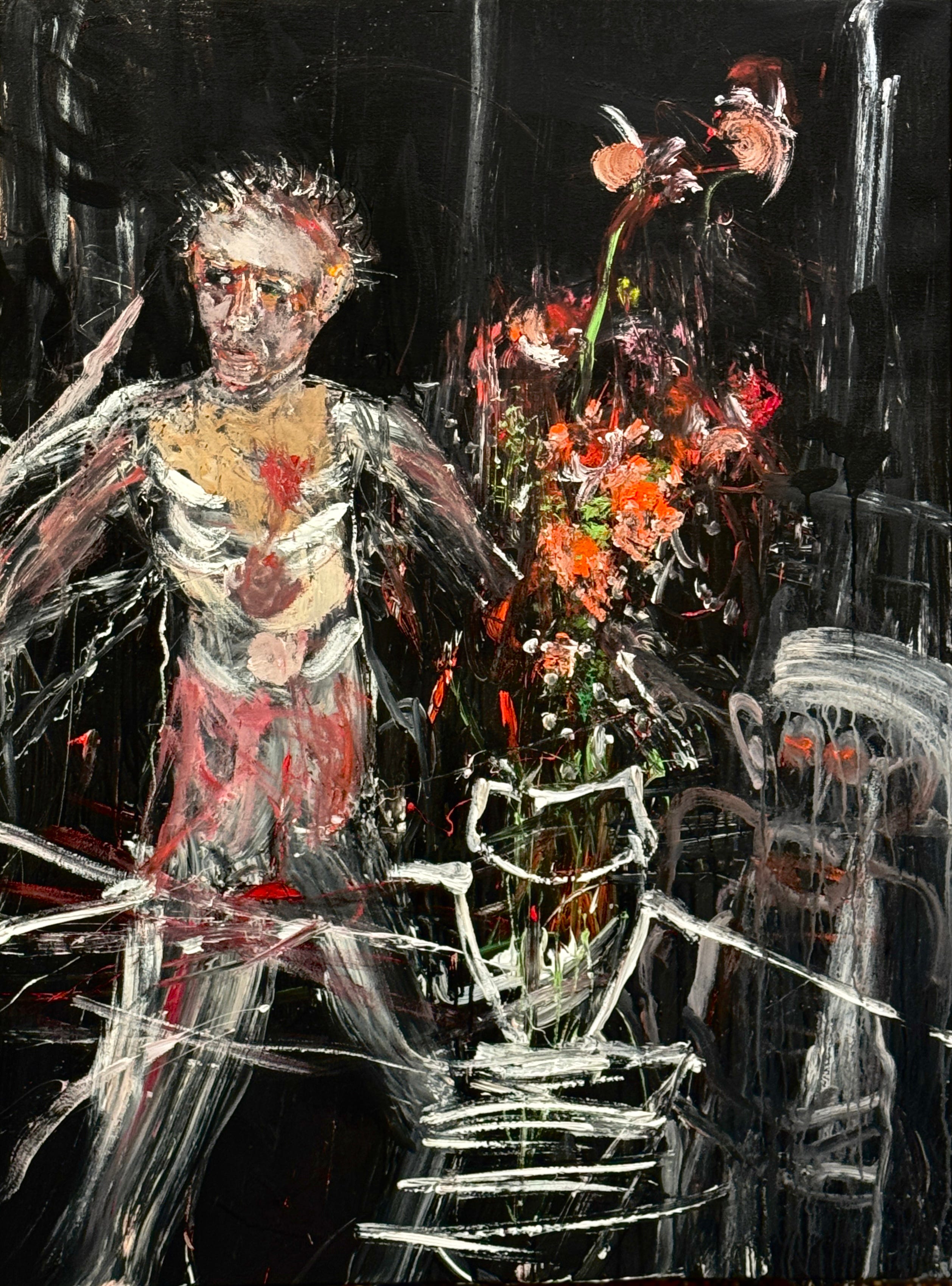
Consider The Arrangement, a man standing beside flowers in a vase. Against black, this ordinary domestic scene becomes theatrical, celebratory. The flowers burst forward with saturated color. The figure gains monumentality. What could be mundane becomes full of fun and excitement.
Joy in Darkness
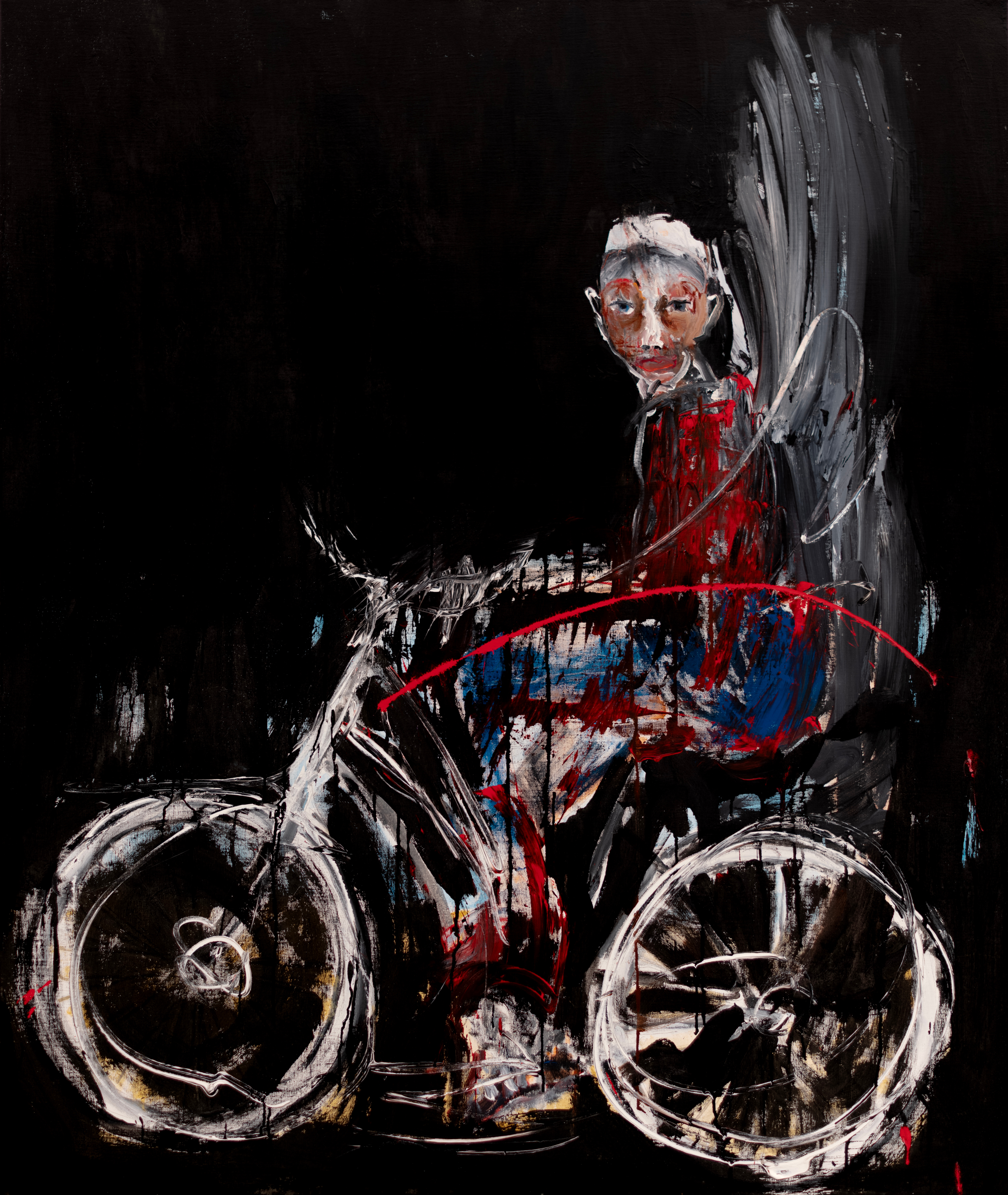
Joy Ride depicts a figure on a bicycle, and the title says everything about what I intended. This is about freedom, movement, exhilaration. The black background doesn’t diminish this joy; it amplifies it. The figure emerges in pure experience, unencumbered by context or setting. The joy and freedom are immediate, concentrated, intensely present
.
.
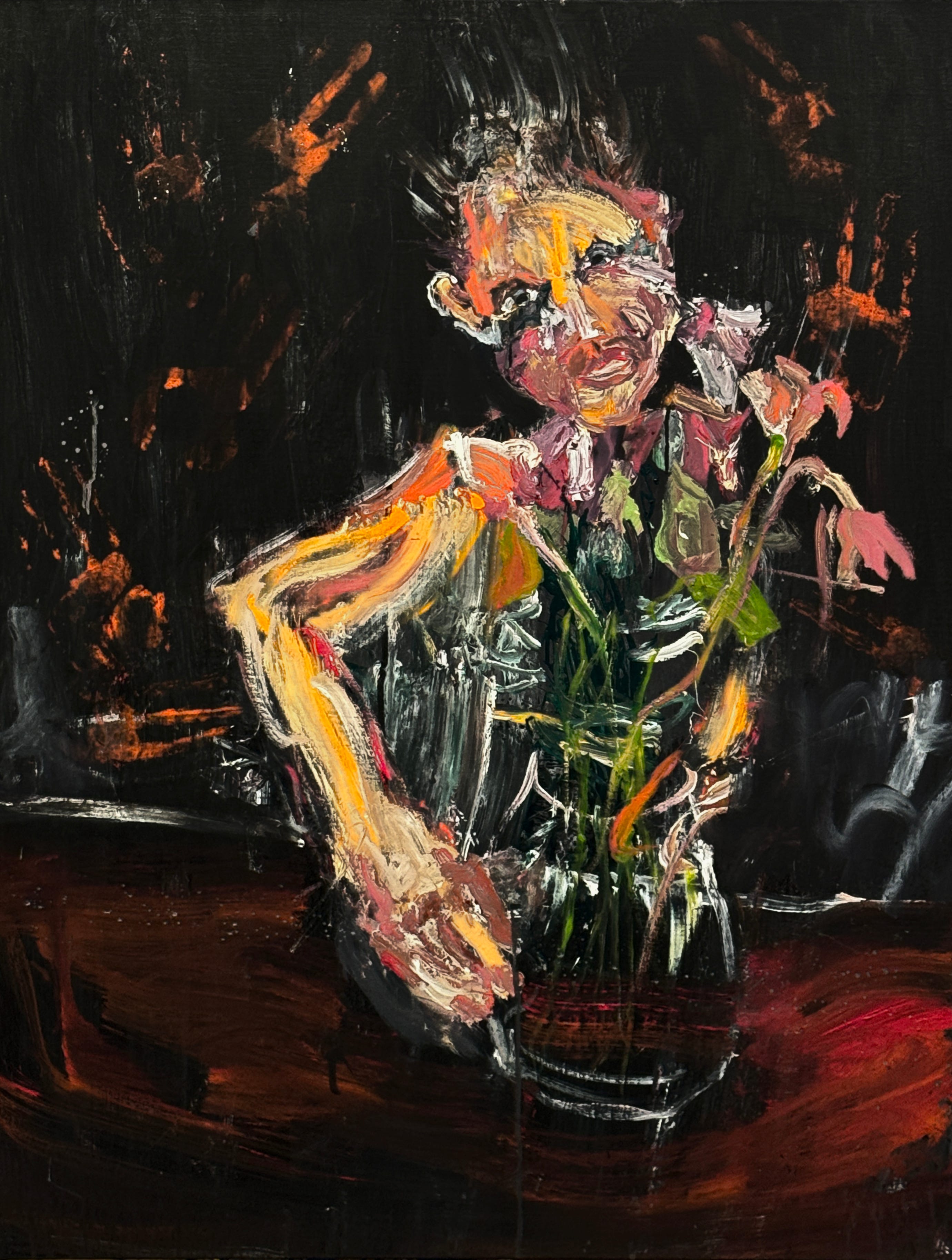
Francis with Flowers is both playful and a tribute to Francis Bacon, whose work I’ve long admired. When I met him years ago and showed him photographs of my paintings, his encouragement meant everything. Like Bacon, I’m interested in how figures can be both distorted and intensely present, how paint can be simultaneously chaotic and controlled. The black in this piece creates a stage for that performance
.
The Adventure of the Unknown
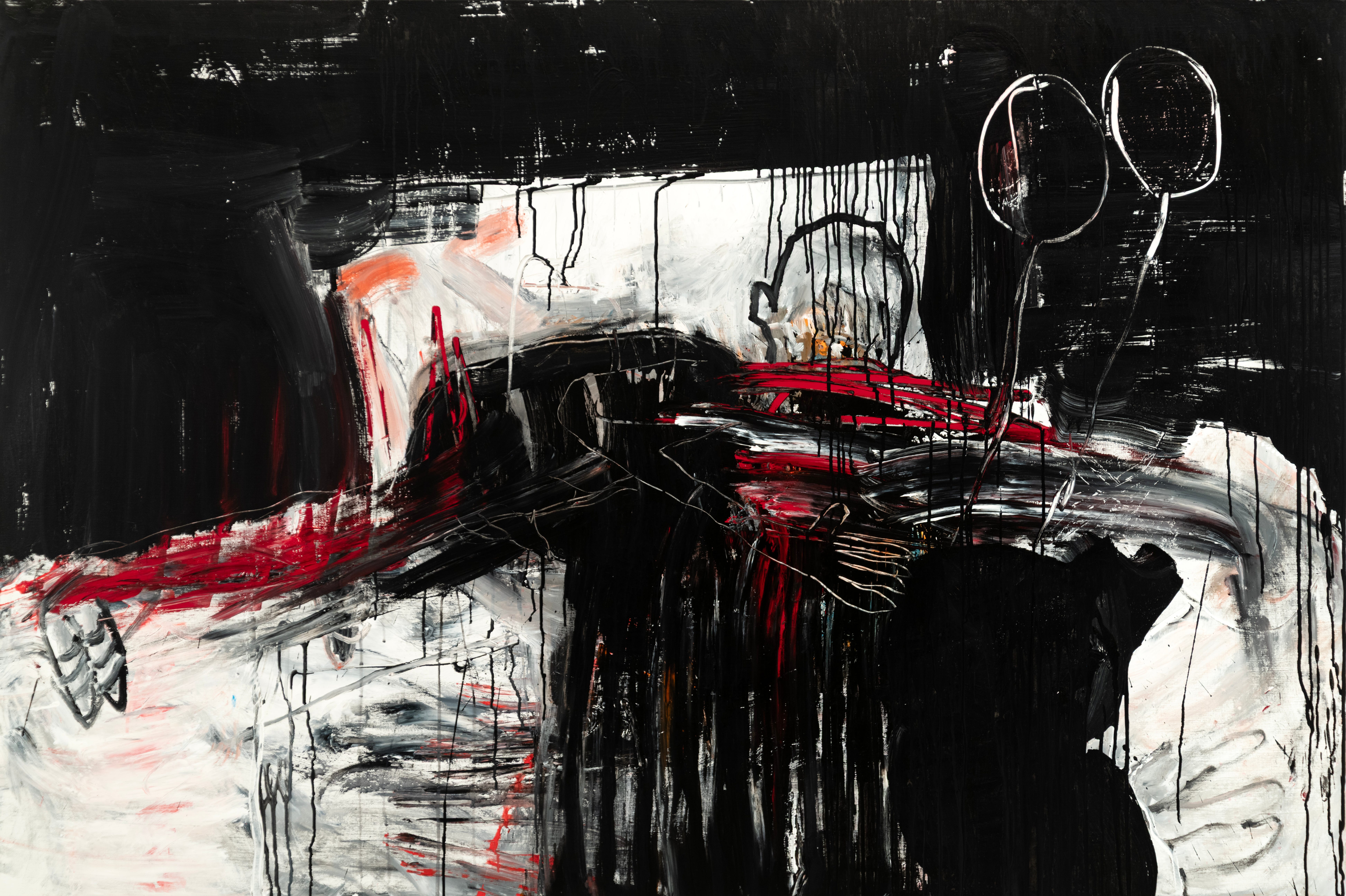
Night Flight engages with what might be unknown, but unknown doesn’t mean frightening. It means adventurous, open, full of possibility. We experience darkness every night, and within it, we dream. The black here is like the darkness behind closed eyelids, it’s the space where imagination happens
.
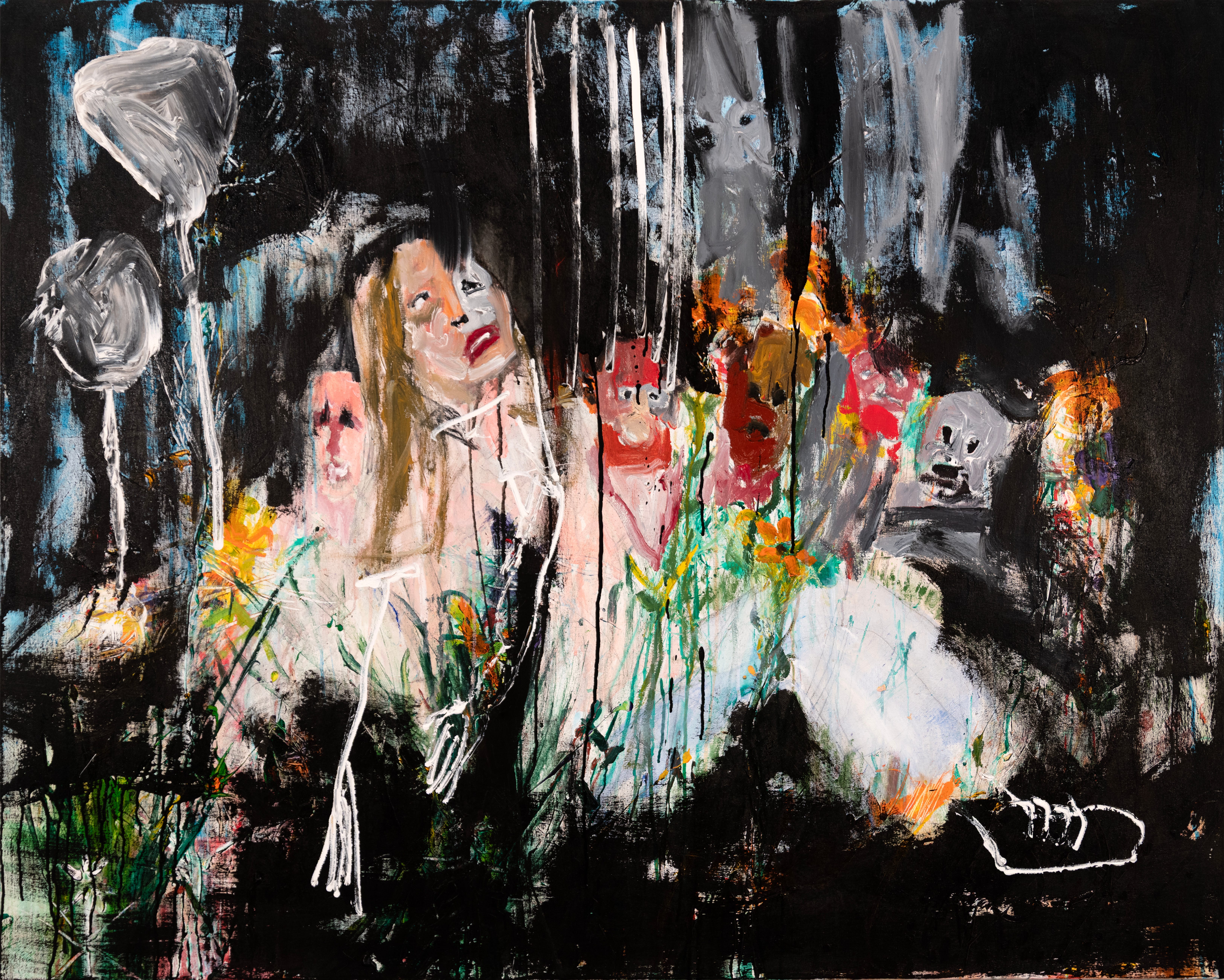
Garden Chorus with its multiple figures and blooming flowers demonstrates how black can hold complexity without confusion. Multiple elements, various colors, different forms all coexist because the black provides unity and coherence. It’s like the silence between notes in music, it gives meaning to everything that sounds
.
Against Conventional Symbolism
The automatic association of black with negativity reveals more about cultural conditioning than about visual experience. In reality, we often see our most vivid colors and experiences against darkness: fireworks against the night sky, a lit window in the evening, faces around a campfire, flowers in a shadowed garden. These moments aren’t frightening; they’re often when we feel most alive.
My black backgrounds work the same way. They’re not about what’s scary in the shadows. They’re about making visible what matters, about letting light be light, about giving color the space to sing.
When viewers bring their preconceptions about darkness to these paintings, they miss the actual experience the work offers: the brightness, the energy, the concentrated vitality of what emerges from that darkness. The black isn’t the subject. It’s the condition that makes the subject possible.
A Different Way of Seeing
Perhaps it’s time to reconsider our symbolic vocabulary. Not every darkness needs to represent fear. Not every void needs to be filled. Sometimes emptiness is generosity, giving space for what matters to breathe. Sometimes black is the most honest background, refusing to distract with false context or pretty scenery that adds nothing.
In these paintings, black is clarity. It’s focus. It’s the decision to show you exactly what I want you to see, bright and undeniable against the quiet. That’s not scary. That’s exhilarating.
Fantastic article, my friend!